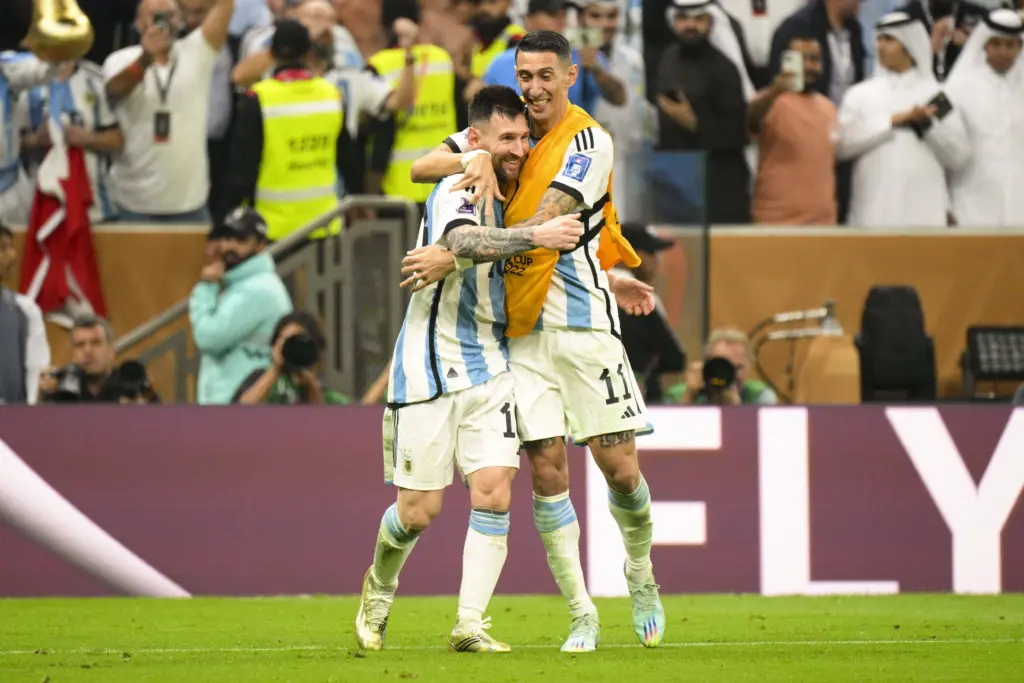
Discover the top 5 greatest FIFA World Cups of all time, as we rank the most unforgettable tournaments filled with legendary moments, iconic goals, and football history.
Every four years, the world comes to a standstill. Schools pause lessons, offices secretly stream matches, families gather around televisions, and billions of eyes fixate on a single ball rolling across the green grass.
For one magical month, language barriers disappear, rivalries intensify, and strangers become friends as they celebrate the world’s most beloved sport at the FIFA World Cup — a global festival of dreams, heartbreak, controversy, music, and unforgettable memories.
Every edition has its heroes and villains, but only a handful have risen above the rest to become timeless masterpieces. Some are remembered for breathtaking finals, others for shocking controversies, iconic anthems, passionate supporters, or once-in-a-lifetime performances that forever changed football history.
Here are the top 5 greatest FIFA World Cups of all time.
5. 1986 (Mexico): The Tournament Of One Man
Every great sporting event has a defining figure, and in Mexico 1986, that figure was Diego Maradona.
The Argentine captain entered the tournament under enormous pressure. Argentina were talented but hardly favourites, yet Maradona transformed the impossible into reality almost single-handedly.
It remains one of the strongest reasons why Mexico 1986 consistently ranks among the top 5 greatest FIFA World Cups of all time.
Nothing symbolises the World Cup better than Argentina’s quarter-final against England. Only four years had passed since the Falklands War, giving the match emotional significance far beyond football.
Then came two moments that would become inseparable from the history of the sport. First, Maradona leapt with goalkeeper Peter Shilton and punched the ball into the net. The referee failed to spot the handball, in a goal Maradona later described as the “Hand of God.”
Four minutes later, he delivered football’s greatest solo goal.
Receiving the ball inside his own half, Maradona danced past five English defenders with impossible balance, pace, and control before calmly beating Shilton. It wasn’t simply a goal; it was a masterpiece of imagination and skill as FIFA later named it the “Goal of the Century.”
The tournament continued with drama at every turn. Belgium fell to Maradona’s brilliance in the semi-final before Argentina met West Germany in an unforgettable final. After surrendering a two-goal lead, Argentina found one last moment of magic when Jorge Burruchaga raced through to score the winner, sealing a thrilling 3–2 victory.
Mexico 1986 remains proof that one extraordinary player can define an entire World Cup.
4. 2010 (South Africa): The Heartbeat Of A Continent
No World Cup carried greater symbolic importance than South Africa 2010. For the first time, football’s greatest tournament came to African soil. The opening ceremony celebrated the continent’s culture, music, and resilience.
The opening match produced one of the most iconic moments in World Cup history.
In the 55th minute, Siphiwe Tshabalala burst down the left flank and unleashed a thunderous strike into the top corner against Mexico.
Soccer City Stadium erupted as thousands of South Africans celebrated a goal decades in the making. Broadcaster Peter Drury immortalised the moment with the unforgettable words: “Goal Bafana Bafana! Goal for South Africa! Goal for all Africa!”
Shakira’s “Waka Waka” became an international phenomenon. Its message of hope, perseverance, and unity perfectly matched the spirit of the tournament and remains perhaps the most iconic World Cup anthem ever created.
The football itself delivered extraordinary drama.
Ghana carried not only the hopes of a nation but the dreams of an entire continent. Standing on the brink of history, the Black Stars were seconds away from becoming the first African team ever to reach a FIFA World Cup semi-final.
Then, in one of football’s most controversial moments, Luis Suárez deliberately blocked Dominic Adiyiah’s goal-bound header with both hands on the goal line.
All eyes turned to Ghana’s captain, Asamoah Gyan.
With the final kick of extra time, he stepped forward knowing that one successful penalty would send Africa into uncharted territory. The stadium held its breath. Gyan struck the ball powerfully, but it crashed against the crossbar. The stadium fell silent.
Uruguay advanced after a penalty shootout win, while millions across Africa mourned what could have been the continent’s greatest football achievement. The incident sparked fierce debate over sportsmanship that continues today.
The final brought together Spain and the Netherlands in a fiercely contested encounter remembered for its physical intensity. As extra time neared its end, Andrés Iniesta scored the winning goal, delivering Spain’s first World Cup title and completing one of the greatest eras in international football.
South Africa 2010 proved that football truly belongs to the entire world, earning its place among the top 5 greatest FIFA World Cups of all time through its unforgettable blend of history, emotion, and iconic football moments.
3. 1970 (Mexico): The Birth Of Football’s Golden Standard
Long before football became a billion-dollar global spectacle, there was Mexico 1970, a tournament many historians still regard as the greatest FIFA World Cup ever played. For the first time, millions of fans around the world watched the tournament live in colour on television.
Italy and West Germany produced one of the most extraordinary matches ever played. Their semi-final, later immortalised as the “Game of the Century,” ended 4–3 after extra time, featuring five goals in a breathtaking 30-minute period. Exhausted players collapsed at the final whistle, having produced one of football’s greatest spectacles.
Yet the tournament ultimately belonged to Brazil.
Led by the legendary Pelé, alongside stars such as Jairzinho, Rivellino, Tostão, and Carlos Alberto, Brazil played a style of football that seemed almost artistic.
Their quick passing, fearless attacking, and effortless creativity captivated audiences across the globe. Jairzinho scored in every match while Pelé demonstrated why he remains one of football’s greatest icons. These unforgettable performances are a major reason Mexico 1970 is consistently ranked among the top 5 greatest FIFA World Cups of all time.
The final against Italy became a masterpiece.
Brazil’s opening goal came from Pelé, whose towering header reminded the world why he was football’s king. Italy briefly fought back, but Brazil’s relentless attacking quality proved unstoppable.
The defining moment arrived late in the match when a flowing team move ended with captain Carlos Alberto smashing home one of the greatest goals ever scored in a World Cup final — a perfect conclusion to perhaps the finest team performance the tournament has ever witnessed.
Brazil won 4–1, becoming the first nation to lift the Jules Rimet Trophy permanently after winning the World Cup for a third time. As yellow confetti filled the Mexican sky, football entered a new era.
More than five decades later, Mexico 1970 remains the benchmark by which every great World Cup is measured — a tournament of breathtaking skill, unforgettable matches, legendary players, and timeless beauty.
YOU MAY ALSO LIKE: Five Biggest Takeaways From Spain vs Belgium As La Roja Set-Up Blockbuster Semi-Final Clash Against France
2. 2014 (Brazil): Beauty, Joy And Heartbreak
Few countries live and breathe football like Brazil, and hosting the World Cup felt like destiny.
From Rio de Janeiro’s beaches to São Paulo’s packed streets, the nation became one endless celebration. Fans sang long before kick-off and continued dancing long after the final whistle.
Music once again united supporters worldwide. The official anthem “We Are One (Ole Ola)” by Pitbull, Jennifer Lopez, and Claudia Leitte filled stadiums, while Shakira’s “La La La (Brazil 2014)” quickly became another unforgettable football anthem.
The tournament produced breathtaking matches.
James Rodríguez announced himself to the world with spectacular goals for Colombia, Costa Rica stunned traditional giants by reaching the quarter-finals, and Lionel Messi inspired Argentina back to the final with moments of brilliance.
Those unforgettable performances are a major reason Brazil 2014 is widely regarded as one of the top 5 greatest FIFA World Cups of all time.
Then came the match nobody will ever forget: Brazil vs Germany. Without injured superstar Neymar and suspended captain Thiago Silva, Brazil entered the semi-final hoping to overcome adversity. Instead, football witnessed its greatest modern shock.
Germany scored once, then twice, and then five times before half-time.
The Mineirão Stadium, once filled with singing supporters, fell into complete silence. Brazilian fans cried openly as Germany completed a historic 7–1 victory. Even today, “Mineirazo” remains synonymous with sporting heartbreak.
Germany completed their triumph by defeating Argentina 1–0 in the final through Mario Götze’s extra-time winner. It was a fitting conclusion to one of the most emotional World Cups ever played.
As the final whistle echoed through the Maracanã, Lionel Messi stood motionless, the World Cup trophy just a few steps away yet painfully out of reach.
He walked past it with tears hidden behind a blank expression — a haunting image that came to define his career. For many, football’s greatest player had missed his best chance to become a world champion.
1. 2022 (Qatar): The Perfect Ending To A Legendary Career
Before a single ball was kicked, the 2022 FIFA World Cup was already the most debated tournament in modern history.
For more than a decade, Qatar’s hosting rights sparked global controversy. Questions over the unprecedented winter schedule, migrant worker welfare, human rights, and the immense challenge of staging football’s biggest event in the Middle East dominated headlines. Critics wondered whether the tournament would be remembered for football or for everything surrounding it.
Then the whistle blew.
For 29 unforgettable days, the game reclaimed centre stage. The stadiums became cauldrons of colour and noise, where chants echoed late into the desert nights and supporters from every continent celebrated side by side. The official anthem, “Hayya Hayya (Better Together),” became the soundtrack of a World Cup that slowly transformed scepticism into wonder.
The drama arrived immediately. In one of the greatest shocks the tournament has ever witnessed, Saudi Arabia stunned Lionel Messi’s Argentina 2–1, ending a 36-match unbeaten run and sending waves of disbelief around the football world. Many believed Argentina’s dream was over before it had truly begun.
It wasn’t.
Messi responded like every great champion does — by inspiring one of the greatest redemption stories in World Cup history.
Match after match, Argentina fought through pressure, nerves, and expectation, while across the bracket another fairytale unfolded. Morocco captivated the world by becoming the first African and Arab nation ever to reach the semi-finals, defeating European giants Spain and Portugal, igniting celebrations from Casablanca to Cape Town.
Then came the final. Not merely a football match. A masterpiece. A clash between the greatest player of his generation and the man destined to inherit the throne; Lionel Messi and Kylian Mbappé.
For nearly 80 minutes, Argentina appeared to be cruising toward glory. Messi orchestrated the game with elegance, and Ángel Di María crowned a flowing team move to give Argentina a commanding 2–0 lead. French supporters sat in stunned silence as the trophy seemed destined for Buenos Aires.
Then football reminded the world why nothing is certain.
In the space of just 97 seconds, Mbappé produced two moments of breathtaking brilliance. First, he calmly converted a penalty. Moments later, he volleyed home an astonishing equaliser that sent the Lusail Stadium into absolute chaos. Argentina’s dream had evaporated in the blink of an eye.
Extra time somehow delivered even more drama. Messi bundled home what looked like the winning goal as millions dared to believe the story had finally reached its perfect ending, but Mbappé refused to surrender as another penalty saw him score another goal and claim a World Cup final hat-trick.
Three goals for France’s young superstar. Two for Messi. Six goals in total. It was football at its most breathtaking, with every attack carrying the weight of history.
The match would be decided from the penalty spot. One by one, Argentina held their nerve. Emiliano Martínez produced heroic saves before Gonzalo Montiel stepped forward with the weight of an entire nation on his shoulders. His strike rippled the net.
Argentina were world champions. Messi dropped to his knees, overwhelmed by emotion. Teammates embraced him, fireworks illuminated the Qatari sky, and millions of Argentines poured into the streets in scenes of uncontainable joy. After years of near misses, heartbreak, and relentless comparisons to Diego Maradona, football’s greatest prize finally belonged to Lionel Messi.
Many have called it the greatest FIFA World Cup final ever played. Perhaps they are right, as Qatar 2022 was more than a tournament — it was the perfect ending to football’s greatest story.
Piala Dunia 2026
Kalau biasanya Piala Dunia itu sudah terasa besar, edisi 2026 bakal terasa seperti “festival sepak bola global” versi maksimal. Untuk pertama kalinya, turnamen ini digelar bareng oleh tiga negara sekaligus—Amerika Serikat, Kanada, dan Meksiko—yang artinya vibes-nya bakal campur aduk antara budaya, stadion, dan gaya dukungan fans yang beda-beda. Bukan cuma soal lokasi, formatnya juga naik level: dari 32 jadi 48 tim. Kebayang nggak, lebih banyak negara ikut, lebih banyak cerita underdog, dan peluang kejutan makin gede. Bisa jadi tim-tim yang biasanya cuma numpang lewat, kali ini malah bikin sejarah. Di sisi lain, jadwal yang makin panjang bikin turnamen ini terasa seperti maraton emosi—dari fase grup yang padat sampai knockout yang makin brutal. Dan karena ini Piala Dunia FIFA 2026, ekspektasinya jelas: gol dramatis, momen ikonik, dan pemain-pemain muda yang tiba-tiba jadi bintang dunia dalam semalam. Intinya, 2026 bukan cuma tentang siapa yang angkat trofi, tapi tentang pengalaman global yang lebih luas—lebih ramai, lebih chaotic, tapi justru itu yang bikin seru.