The 2026/27 campaign will see new Premier League managers kickstart a historic era in the league.
For years, the league has been accustomed to seeing stability at the top, but next season marks the simultaneous collapse of the modern EPL order and a total shift of the old guard across English football.
The reason for this sudden change is down to a brutal 2025/26 campaign that saw an unprecedented clear-out of elite coaches.
While it fell just short of the record number of managerial sackings in the league (14) set in 2022/23, the sheer scale of high-profile departures across the last nine months has triggered a difficult generational reset.
Normally, the aim of the Premier League’s big teams is consistency, with building year-on-year being of utmost importance.
But going into the next campaign, four of the traditional Big Six are starting completely afresh – leaving Arsenal’s Mikel Arteta as the longest-serving manager in the EPL.
It is a massive reset that has seen the managers who defined the last decade exit the stage, ushering in a new era of coaches with a totally different vision and philosophy that could reshape the league for years to come.
With so many new Premier League managers arriving across the division, the 2026/27 Premier League season promises to feel unlike any other in recent memory.
New Premier League Managers: The End of the Guardiola Era and Manchester City’s Great Reset
Pep Guardiola, who represented the pinnacle of the old guard, brought an end to his historic time at Manchester City after 10 glorious years.
His departure from the Etihad signals the end of one of the most dominant eras in English football history. With his commanding presence no longer looming over the league, the rest of the Premier League can finally breathe a collective sigh of relief.
The former Barcelona and Bayern coach led the Citizens to every possible trophy in England and Europe, and he is replaced by former Chelsea boss Enzo Maresca, who returns to the Etihad to spearhead City’s unknown future.
The Italian’s arrival is among the most intriguing appointments of the summer and will be closely scrutinised as he attempts to build on Guardiola’s legacy while forging a new identity of his own.
One thing seems certain: the new Manchester City manager may begin his reign under difficult circumstances.
Enzo Maresca’s relationship with his former club, Chelsea, and the Blues’ fanbase was badly damaged after reports emerged that Manchester City had been “tapping” him up long before his premature departure from the club on New Year’s Day, which contributed to the Blues’ dramatic collapse during the second half of the campaign.
After showing promise earlier in the season, Chelsea endured a stunning decline and eventually finished 10th in the Premier League – one of their poorest campaigns since the BlueCo takeover.
That controversial exit has made Maresca one of the most closely watched of all new Premier League managers who arrived this summer.
With the Premier League title race set to be more competitive than it has been in years, every decision he makes will be scrutinised, and there will be little room for error.
Former Real Madrid Coaches Lead the Premier League Managers Revolution
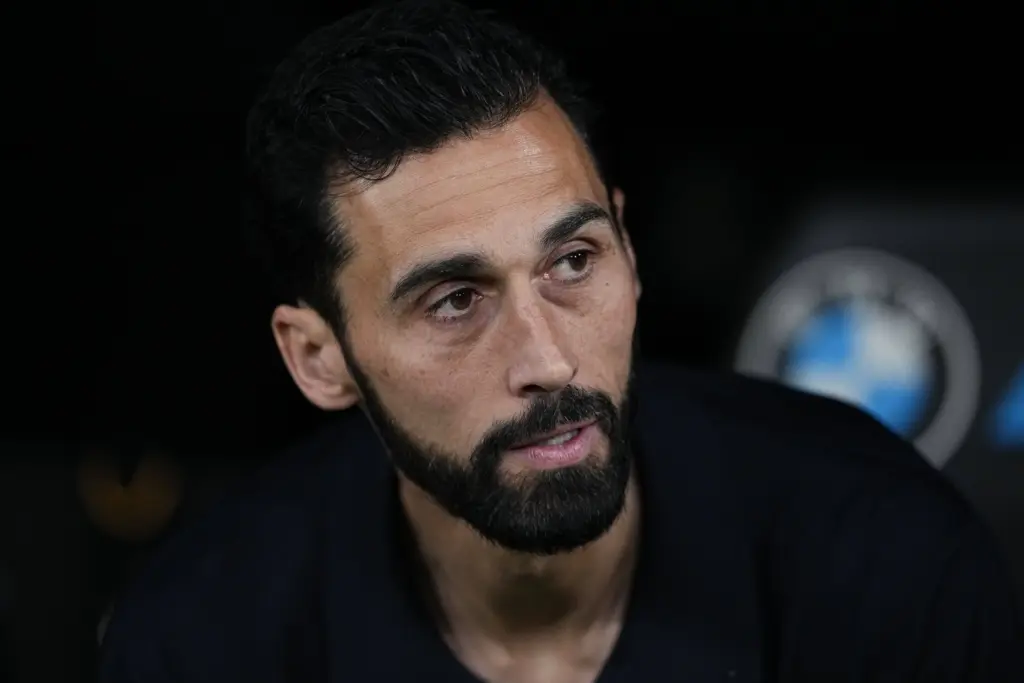
One of the most fascinating storylines surrounding the new Premier League managers is the arrival of former Real Madrid coaches Xabi Alonso and Álvaro Arbeloa.
Having established their managerial reputations in Spain, both men are now bringing their philosophies and ideas to English football, adding another compelling dimension to the summer’s Premier League managerial changes.
Xabi Alonso’s appointment as the new Chelsea manager gathered more traction than any other new managerial signing this summer, due to his ties with Liverpool and his remarkable success in Germany with Bayern Leverkusen.
His win percentages of 62.9% at Bayer Leverkusen and 70.59% at Real Madrid have given Chelsea fans plenty to be excited about.
The Spaniard, who was unveiled just last week as the new Chelsea manager, has spoken about the importance of building a winning culture, developing a strong team mentality, and instilling a collective “hunger” for victory.
He said: “The [facilities at Cobham are] great but you need to give it the soul. You need to give it purpose, you need to bring a good work, a good energy, positiveness, that we are in a nice place to work, and now we have all the ingredients for that.
[On Thursday] I will be with the guys and you start creating connection, the human connections, for them to feel good, and when you feel good normally you perform good.”
Meanwhile, Arbeloa, who spent five months in charge of Real Madrid’s first team, has completed a move to Fulham.
The 43-year-old rose through Real Madrid’s coaching ranks after managing several youth sides, earning a reputation as one of Spain’s brightest young coaches before securing his first managerial opportunity in one of the world’s most demanding leagues.
Beyond their shared experience as former Real Madrid coaches, Alvaro Arbeloa and Xabi Alonso also enjoyed a successful partnership on the pitch at the Santiago Bernabéu, where they forged one of football’s closest friendships.
Years later, their paths have crossed once again – this time as rivals in the Premier League.
Their journey is a testament to how both men have evolved professionally. From teammates at one of the world’s biggest clubs to respected managers in their own right, they have steadily built their coaching credentials through hard work and a clear footballing philosophy.
Their arrival in England perfectly captures why the 2026/27 Premier League season feels so different.
The league is becoming home to a new generation of managers whose careers have been shaped by shared experiences, lifelong friendships, and the influence of some of Europe’s greatest football institutions.
YOU MAY ALSO LIKE: Youri Tielemans Transfer to Manchester United: How Important Will He Be for Michael Carrick’s Side?
Marco Rose and Bournemouth’s Bold Statement of Intent
Among the new Premier League managers, Marco Rose’s move to Bournemouth is still one of the most underrated appointments heading into the new season.
While the spotlight has largely been on managerial changes at Chelsea, Manchester City, and Liverpool, Bournemouth’s decision to appoint the German could prove just as significant for the league as a whole.
The former Borussia Dortmund and RB Leipzig coach arrives in England with a CV few managers outside the traditional top six can match.
Having coached in the Champions League, led Salzburg to consecutive league titles, won the DFB Pokal with RB Leipzig and developed some of Europe’s brightest young talents, his experience at the highest level makes his move to the Vitality Stadium a remarkable statement of intent.
Another important factor is the Premier League’s growing appeal. Not long ago, a coach with Rose’s pedigree would have waited for an opportunity at one of Europe’s more established giants.
But today, English clubs seen as mid-table now have the financial capability, ambition, and long-term planning needed to attract elite tactical minds, highlighting the growing quality of new EPL coaches arriving in the division.
Bournemouth, who have always found themselves in a relegation battle, now have a manager with a clear footballing identity built around aggressive pressing, quick transitions, structured possession, and the development of young players.
If the new Bournemouth manager succeeds, it will reinforce the idea that ambitious clubs outside the traditional elite can now compete not only for talented players but also for some of Europe’s most respected coaches.
A New Identity at Anfield Under Andoni Iraola
After the departure of Jurgen Klopp, Arne Slot was hired to lead the post-Klopp era.
But after just two seasons, Liverpool have dramatically pressed the tactical reset button, appointing Andoni Iraola as the new manager.
Despite guiding the Reds to the Premier League title in his first season, Arne Slot endured a dramatic downturn in his second campaign as his side repeatedly failed to hold onto winning positions, leading to growing criticism from supporters over his tactical approach.
Slot’s preference for a measured, possession-based style centred on controlling the tempo of matches ultimately gave way to a complete tactical reset.
With the appointment of the new Liverpool manager, the Reds are expected to adopt a vastly different identity.
Andoni Iraola’s philosophy is built on relentless intensity, aggressive pressing, rapid vertical attacks, and constant movement off the ball.
Instead of patiently constructing attacks through sustained possession, his teams look to regain the ball high up the pitch and strike quickly before opponents have time to reorganise.
Despite the majority of Liverpool supporters being unconvinced about the appointment of Iraola, the change could feel strangely familiar.
The former Bournemouth coach’s style shares several characteristics with the “heavy metal football” that made Klopp’s side one of Europe’s most feared teams.
If Iraola successfully implements his philosophy, Anfield could once again become one of the most exciting stadiums in England, driven by relentless pressing, quick transitions and wave after wave of attacking pressure, while they re-establish themselves as serious contenders in the Premier League title race.
How Young Managers Are Redefining English Football
One of the main reasons why the 2026/27 Premier League season will feel so different from previous campaigns is the dramatic drop in the average age of Premier League managers.
For years, the league was dominated by seasoned veterans whose experience stretched across decades.
Managers such as Pep Guardiola, Jürgen Klopp, José Mourinho, Roy Hodgson, Antonio Conte, Arsène Wenger and Louis van Gaal became the defining faces of English football, combining tactical expertise with years of elite-level management.
But the picture has now changed dramatically.
The latest wave of Premier League managerial changes has ushered in a younger generation of coaches who have grown up in an era shaped by analytics, sports science and tactical innovation.
With many of the league’s established veterans stepping aside – and experienced figures like David Moyes at Everton now among the oldest in the division – the balance has shifted firmly towards managers in the 2026/27 season who are under the age of 50.
How this translates onto the pitch could be one of the defining features of the campaign.
These new EPL coaches represent a different way of thinking. Modern managers are far more willing to experiment with hybrid formations, fluid positional rotations and pressing structures that evolve from game to game.
This is a clear departure from many of the older generation, who often remained loyal to rigid systems and were less inclined to make significant tactical adjustments.
As a result, the Premier League is increasingly becoming a breeding ground for football innovation.
Week after week, the new Premier League managers will attempt to outthink one another through meticulous preparation, tactical flexibility and analytical detail, making the Premier League title race and the battle throughout the table more unpredictable than ever.
The Premier League’s Shift from Managers to Head Coaches
Another noticeable and distinctive feature of the new Premier League managers is not just their tactical philosophy, but the role they now occupy within their clubs.
For decades, English football revolved around powerful managers. Figures such as Sir Alex Ferguson, Arsène Wenger and, more recently, Pep Guardiola exercised enormous influence over almost every footballing decision made at their clubs.
They shaped recruitment, oversaw youth development, influenced transfer policy and built their teams around their own footballing ideology. The success or failure of a project was often tied directly to that individual.
Today, however, that model is rapidly disappearing.
One of the biggest Premier League managerial changes in modern football is the shift from the traditional “manager” to the “head coach.”
Of the 20 men leading Premier League clubs in the 2026/27 season, only three officially hold the title of manager, with new Chelsea manager Xabi Alonso being the latest to receive that distinction.
By contrast, today’s head coaches are primarily responsible for training sessions, match preparation, tactical development and player improvement.
Above them, recruitment, contract negotiations, academy integration and long-term squad planning are increasingly handled by sporting directors, recruitment departments and data analysts working behind the scenes.
In other words, clubs are no longer building around one powerful personality – they are building around a football structure.
Rather than depending on one dominant figure, clubs are now placing their faith in long-term structures, making this one of the defining characteristics of the Premier League managers’ 2026/27 season.
This evolution makes modern head coaches far more interchangeable.
If results fail to meet expectations or a team’s tactical system begins to stall, a sporting director can replace the coach with another who shares a similar philosophy without dismantling the squad or restarting the entire project.
Ultimately, the 2026/27 Premier League season represents more than just a changing of faces in the dugout. It signals the beginning of a new tactical era in English football, one that could reshape the Premier League for years to come.
Piala Dunia 2026
Kalau biasanya Piala Dunia itu sudah terasa besar, edisi 2026 bakal terasa seperti “festival sepak bola global” versi maksimal. Untuk pertama kalinya, turnamen ini digelar bareng oleh tiga negara sekaligus—Amerika Serikat, Kanada, dan Meksiko—yang artinya vibes-nya bakal campur aduk antara budaya, stadion, dan gaya dukungan fans yang beda-beda. Bukan cuma soal lokasi, formatnya juga naik level: dari 32 jadi 48 tim. Kebayang nggak, lebih banyak negara ikut, lebih banyak cerita underdog, dan peluang kejutan makin gede. Bisa jadi tim-tim yang biasanya cuma numpang lewat, kali ini malah bikin sejarah. Di sisi lain, jadwal yang makin panjang bikin turnamen ini terasa seperti maraton emosi—dari fase grup yang padat sampai knockout yang makin brutal. Dan karena ini Piala Dunia FIFA 2026, ekspektasinya jelas: gol dramatis, momen ikonik, dan pemain-pemain muda yang tiba-tiba jadi bintang dunia dalam semalam. Intinya, 2026 bukan cuma tentang siapa yang angkat trofi, tapi tentang pengalaman global yang lebih luas—lebih ramai, lebih chaotic, tapi justru itu yang bikin seru.